
Damp, condensation, and mould are among the most common property problems in the UK. Estimates suggest that over a million households in England are living with a significant damp issue right now, and when you include minor condensation and surface mould, the real number is far higher. The UK has a climate that produces a lot of moisture, a housing stock that is among the oldest in Europe, and millions of homes that were built before modern ventilation, insulation, and damp-proofing standards existed.
The good news is that damp and mould are almost always fixable. The difficulty is that the word “damp” gets used to describe several different problems, each with its own cause and its own solution. Treating the wrong type, or just cleaning mould off a wall without dealing with what is causing it, is a waste of time and money. This article explains what is actually going on, how to identify the type of damp you are dealing with, and what needs to happen to resolve it properly.
Why Are Damp, Condensation, and Mould So Common in the UK?
The UK has a temperate maritime climate with relatively high humidity for much of the year. Rainfall is frequent, winters are cold, and the gap between indoor and outdoor temperatures creates ideal conditions for moisture to collect on cold surfaces inside the home.
A large proportion of the UK’s housing stock was built before 1919, with solid walls, limited insulation, and ventilation designed around open fireplaces rather than sealed double glazing. When those fireplaces were blocked up and windows replaced, the natural airflow that kept the building dry was often lost without anything to replace it. Modern living adds further pressure. The average household produces between 10 and 15 litres of moisture every day through cooking, bathing, breathing, and drying clothes. In an older property with poor airflow, that moisture has nowhere to go.
What Is the Difference Between Condensation, Penetrating Damp, and Rising Damp?
These three terms describe fundamentally different problems, and confusing them leads to the wrong fix being applied.
Condensation
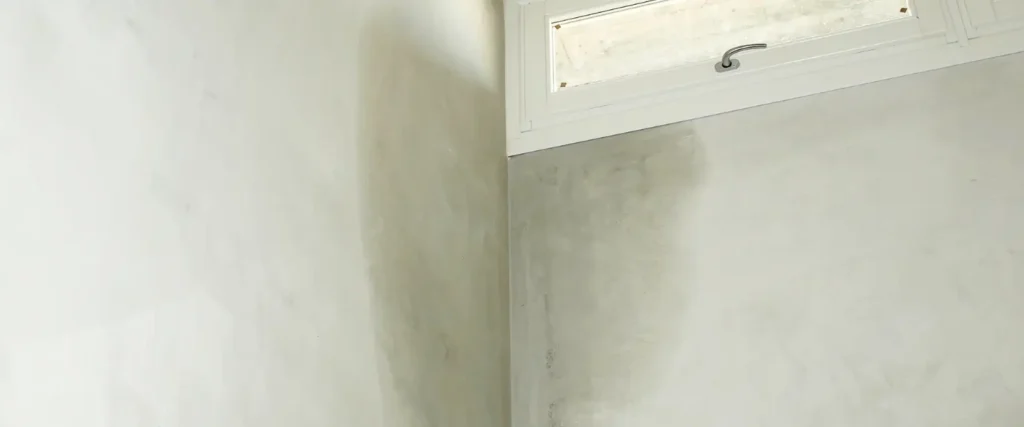
Condensation is moisture that forms when warm, humid air meets a surface colder than the dew point. It is the most common form of damp in UK homes by a wide margin. Every time someone takes a shower, boils a kettle, or dries clothes indoors, moisture enters the air. If ventilation is poor, that moisture accumulates and settles on cold walls, windows, corners, and behind furniture. The worst affected areas are typically bathrooms, kitchens, and bedrooms where people breathe out moisture overnight in a closed room. Cold spots caused by thermal bridging, where a structural element like a lintel conducts cold from outside, are also common condensation points.
Penetrating Damp
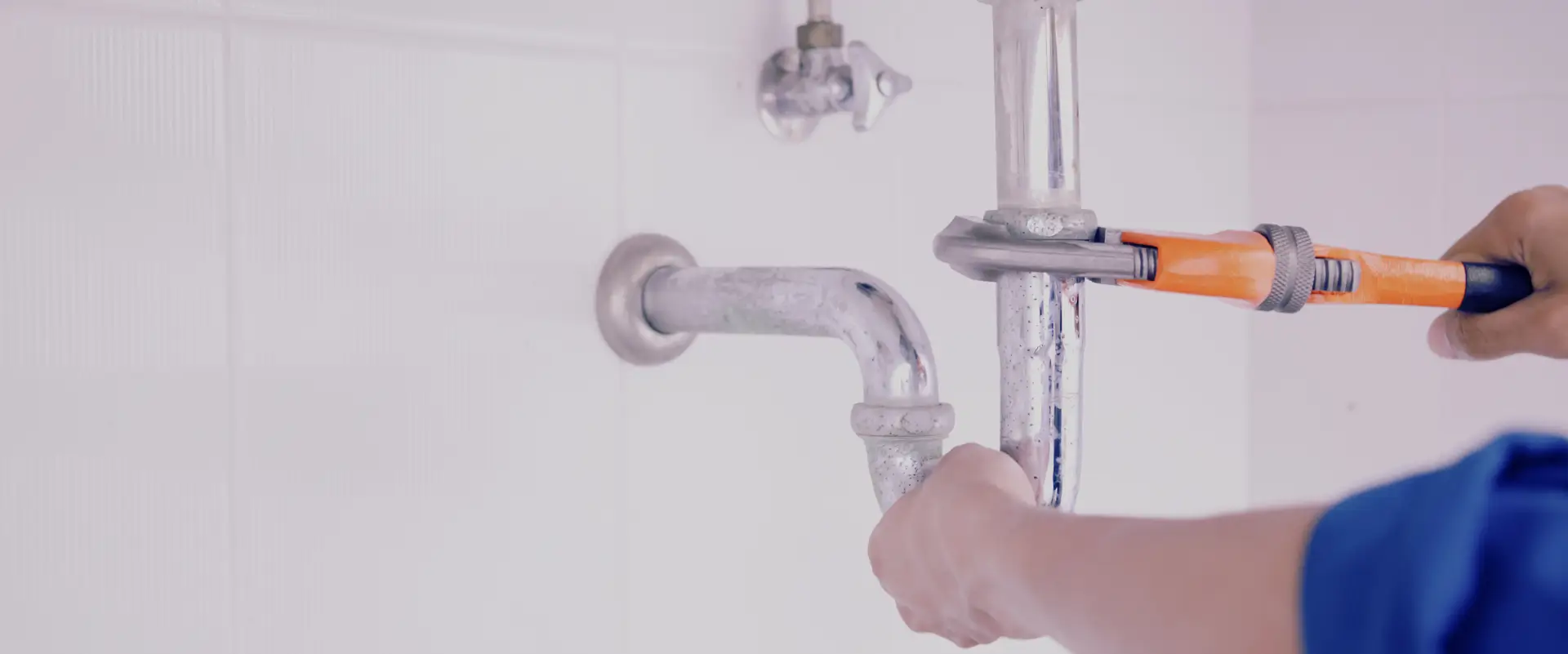
Penetrating damp is water that enters the building from the outside through a specific defect. The most common culprits are failed pointing in brickwork, cracked or blown render, broken roof tiles, blocked or leaking gutters and downpipes, and failed seals around windows or doors. Internal plumbing leaks, including slow drips from joints that are easy to miss, can produce similar results. The telltale sign is a damp patch that corresponds to an external defect and gets worse after rain.
Rising Damp
Rising damp occurs when groundwater is drawn upward through masonry by capillary action. Modern buildings include a damp-proof course to prevent this. In older properties, the damp-proof course may have failed, been bridged by raised ground levels, or may never have existed. True rising damp produces a consistent band of dampness along the base of a wall, often with salt deposits or a white crystalline residue. It is worth noting that rising damp is significantly less common than many damp-proofing companies suggest. A large proportion of low-level damp is actually condensation settling on the coldest part of the wall, or splashback from poorly maintained external ground levels. A proper diagnosis before any treatment is essential.
Recommended to Read: The Flooring Mistake That Can Ruin Your Entire Room
What Does Mould Need to Grow, and Why Does It Keep Coming Back?
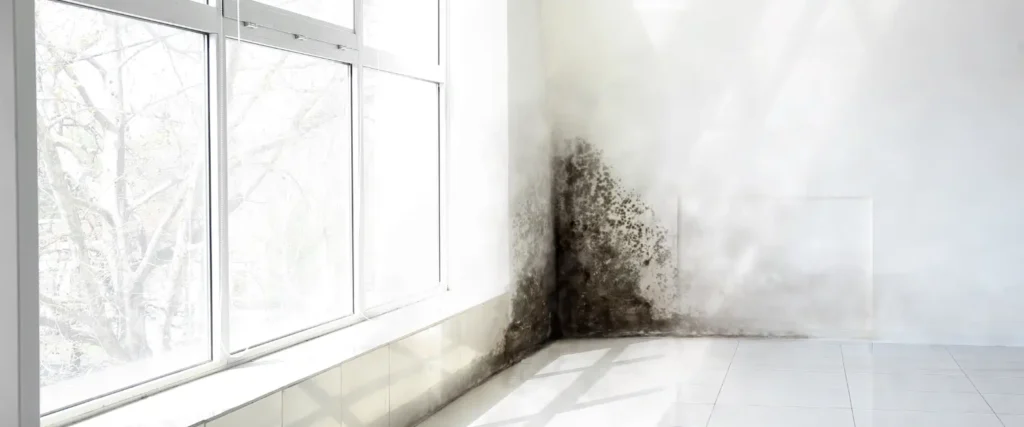
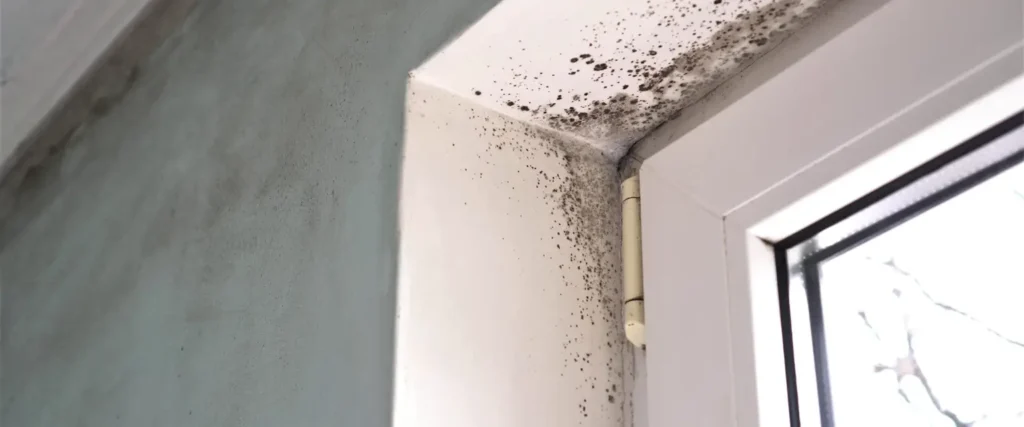
Mould is a fungus that needs moisture, a food source, and the right temperature. In a home, organic materials such as plaster, wallpaper, paint, wood, and dust provide the food. The temperature inside a typical UK home is almost always within the range mould needs. That means the only factor you can realistically control is moisture.
This is why cleaning mould off a surface without addressing the underlying damp is a temporary fix at best. The mould will return as long as the moisture source remains. Where condensation is the issue, improving ventilation and reducing humidity are the permanent solutions. Where penetrating or rising damp is involved, the building defect must be repaired before any surface treatment will last.
How Can You Tell What Type of Damp You Are Dealing With?
Identifying the type of damp is the most important step, because it determines what kind of repair is needed.
If you see moisture on windows, mould in corners or behind furniture on external walls, and the problem appears during cold weather and improves in summer, you are almost certainly dealing with condensation. If it is concentrated in bathrooms, kitchens, and bedrooms, that reinforces the diagnosis.
If there is a damp patch on an internal wall that lines up with a visible defect on the outside and gets worse in wet weather, you are looking at penetrating damp. Staining on ceilings below the roofline or around chimney stacks also points to water getting in from above.
If dampness is confined to the lower section of a wall, below about one metre, with tide marks, bubbling paint, or salt deposits, rising damp is a possibility. But get a professional opinion before paying for a damp-proof course, because a significant number of “rising damp” diagnoses are actually something else.
If you are not sure, a professional damp survey using a calibrated moisture meter and a thorough inspection of the property is the most reliable way to get a clear answer.
When Is Damp or Mould a Serious Problem Rather Than a Minor Nuisance?
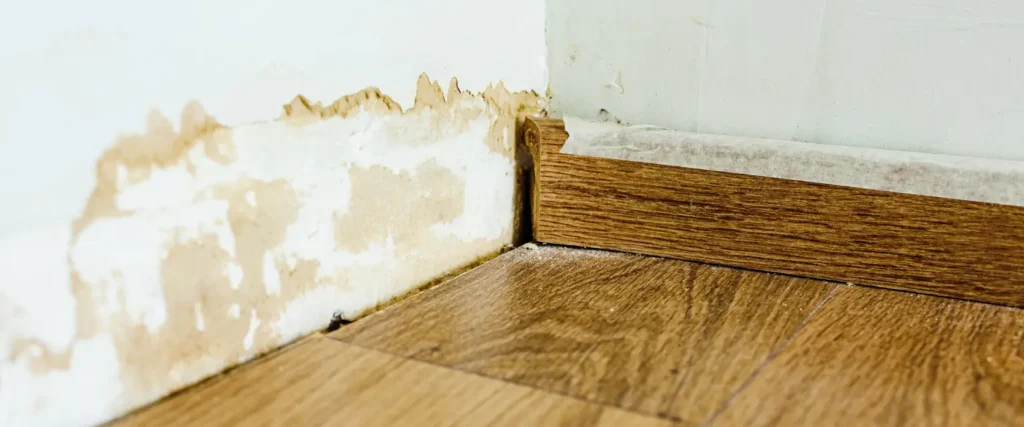
A small amount of condensation on a window in winter is normal. But damp or mould becomes serious when it is persistent, covers a significant area, appears in multiple rooms, keeps returning after cleaning, or when anyone in the household is experiencing health symptoms such as coughing, wheezing, or worsening asthma. Prolonged exposure to mould spores can cause or aggravate respiratory conditions, skin irritation, and allergic reactions. Children, elderly people, and anyone with an existing lung condition are particularly vulnerable.
If you are a landlord, damp and mould in a tenanted property is a legal responsibility, not just a maintenance issue. Under the Renters’ Rights Act 2025, Awaab’s Law is being extended to private rentals, introducing fixed timescales for investigating and resolving damp and mould hazards. The consequences of ignoring a complaint about mould are now more serious than ever.
Further Reading: Why Choosing the Right Kitchen Fitter Makes All the Difference
What Repairs and Remediation Work Actually Fix the Problem?
The right fix depends entirely on the type of damp.
Fixing Condensation at the Source
The priority is to improve ventilation and reduce excess moisture. In bathrooms and kitchens, a properly working extractor fan that vents to the outside is essential. In bedrooms and living areas, trickle vents or a whole-house positive input ventilation (PIV) system can make a dramatic difference. A PIV unit sits in the loft and gently pushes filtered, dry air into the home, displacing moist air and reducing the conditions mould needs to grow.
Improving heating also helps. A home kept at a consistent, moderate temperature will have warmer wall surfaces and less condensation. Cold spots caused by thermal bridging can sometimes be improved with internal insulation or by pulling furniture away from external walls to allow air to circulate.
Repairing Penetrating Damp
The fix is to find and repair the defect letting water in: repointing brickwork, repairing cracked render, replacing a damaged roof tile, clearing gutters and downpipes, or resealing around windows and doors. In some cases, a leaking internal pipe is the cause, and a plumbing repair resolves the problem entirely. Once the water source is stopped, the affected area needs to dry out thoroughly before redecoration. Depending on the damage, this may involve removing and replacing wet plaster.
Treating Rising Damp
If true rising damp is confirmed by a professional survey, the standard treatment is a chemical damp-proof course injected into the mortar at low level. Affected plaster below the injection line will typically need replacing with a salt-resistant renovating plaster. Before committing to this, make sure the diagnosis is correct. If the damp is actually caused by condensation, a bridged damp-proof course, or high external ground levels, a chemical injection will not solve the problem. Lowering ground levels, clearing soil away from airbricks, and fixing surface drainage can sometimes resolve the issue without chemical treatment.
Dealing With Mould After the Damp Is Resolved
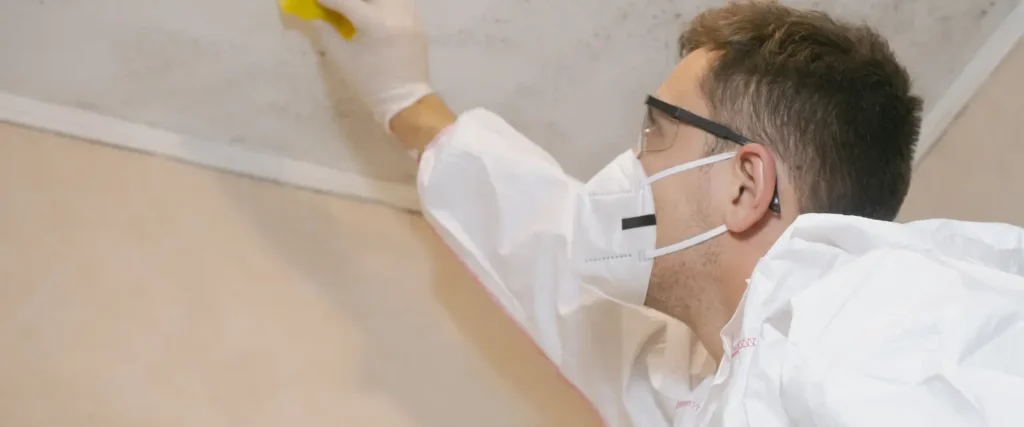
Once the moisture source has been addressed, mould-affected surfaces need proper treatment. Surface mould can be removed with a fungicidal wash. If mould has penetrated the plaster, the affected area should be stripped back, treated, and replastered before redecorating. Painting over mould without treating the substrate is one of the most common mistakes homeowners make, and it guarantees the problem will return. A professional plastering and decorating job after remediation provides a clean, sealed surface that resists future moisture issues.
What Can You Do Yourself, and When Should You Call a Professional?
Some damp and mould issues can be managed with straightforward changes. Opening windows for a short period daily, using extractor fans when cooking or bathing, keeping lids on pans, drying clothes outside or in a vented dryer, and pulling furniture away from cold external walls can all reduce condensation. Cleaning surface mould with a fungicidal spray is a reasonable short-term measure if the area is small and the mould is not recurring.
Call a professional if the mould covers a large area, keeps coming back, or if you can see damp patches on walls or ceilings that do not dry out. You should also seek professional help if the problem appears to be structural, or if anyone in the household is experiencing health problems that could be related to the home environment. For the kinds of repairs that typically follow a damp diagnosis, from replacing plaster to fixing pipes, improving ventilation, or redecorating, a skilled property maintenance professional can often handle the full scope of work without the need for multiple specialist contractors.
What Should Landlords Know About Damp and Mould in 2026?
Damp and mould in rented properties is no longer something landlords can afford to leave unresolved. Under existing law, landlords must keep the structure and exterior in repair, ensure the home is fit for habitation, and maintain heating and ventilation systems. Tenants living with persistent damp or mould have grounds to seek repairs through the court, and local authorities can issue improvement notices and civil penalties.
Awaab’s Law, already in force for social housing, is being extended to private rentals under the Renters’ Rights Act 2025. It will impose fixed timescales for investigating and resolving damp and mould hazards. The government has made clear that blaming mould on tenant behaviour without proper investigation will not be acceptable. The most practical thing a landlord can do right now is inspect every property for signs of damp and address any issues before a tenant raises a complaint. Preventive maintenance, adequate ventilation, and prompt repairs are far cheaper than enforcement action or compensation claims.
If you have a damp or mould problem that keeps coming back, or you are not sure what is causing it, get in touch with The Handy Home Pro for a straightforward assessment and quote. You can also browse our full range of property maintenance services or visit our FAQs page if you have questions about how we work.
FAQs: Frequently Asked Questions
Condensation is the most common cause by a significant margin. It occurs when warm, moist air meets cold surfaces inside the home. Poor ventilation, inadequate heating, and limited insulation all increase the risk, and these factors affect a large proportion of UK housing, particularly older properties.
Condensation tends to appear on cold surfaces such as windows and external walls, is usually worse in winter, and is most common in kitchens, bathrooms, and bedrooms. Penetrating damp creates more localised damp patches that often get worse after rainfall and can usually be traced to a specific external defect such as damaged pointing, cracked render, or a faulty gutter.
In most cases, yes. If mould is caused by a building defect, poor ventilation design, or inadequate heating provision, the landlord is legally responsible for resolving it. Under the Renters’ Rights Act 2025, Awaab’s Law is being extended to private rentals, which will require landlords to investigate and resolve damp and mould within fixed timescales.
No. Painting over mould without addressing the underlying moisture source will not stop it from returning. The damp must be resolved first, the affected surface must be properly treated, and any damaged plaster should be replaced before redecorating.
You should get a professional survey if mould keeps returning after cleaning, if damp patches are visible on walls or ceilings and do not dry out, if multiple rooms are affected, or if anyone in the household is experiencing respiratory symptoms that may be linked to the home environment.
In many cases, yes. Condensation forms because excess moisture in the air has nowhere to go. Improving ventilation through extractor fans, trickle vents, or a whole-house positive input ventilation system removes the moist air before it can settle on cold surfaces. Severe cases may also need improved insulation or more consistent heating.