
Damp, condensation, and mould are among the most searched home problems in the UK for good reason: they are extremely common, they can cause visible damage relatively quickly, and they have a habit of coming back even after you think you have dealt with them. The most important thing to understand before attempting any fix is that these three terms are not describing the same problem. Treating mould without understanding what is causing it, or confusing condensation with structural damp, is why so many attempts to fix these issues end in frustration.
This article sets out what each problem actually is, how to tell them apart, and what a sensible resolution looks like depending on the cause.
The Three Types of Damp Are Not the Same Problem
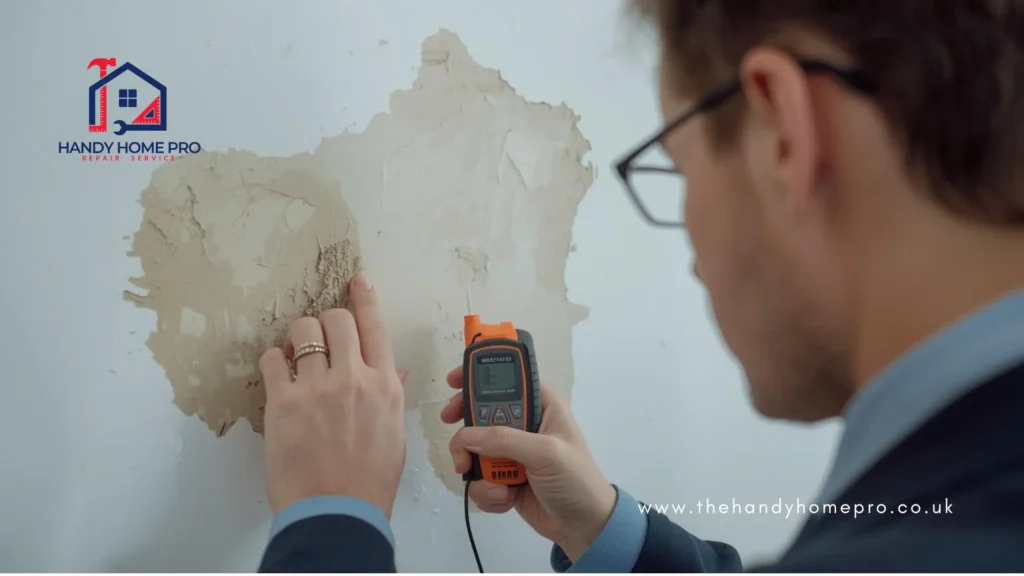
When people talk about damp in a home, they are usually referring to one of three distinct problems: condensation, penetrating damp, or rising damp. Each one has a different cause, appears in a different way, and requires a different approach to fix. Getting the diagnosis right is the starting point for everything else.
Condensation is by far the most common of the three. It is caused by moisture in the air coming into contact with surfaces that are cold enough to cause the moisture to turn back into water. It is not a structural defect and it is not a sign that the building has failed. It is a consequence of how a property is being used, ventilated, and heated.
Penetrating damp enters a building horizontally through a defect in the structure: a crack in an external wall, failed pointing in brickwork, damaged flashing around a chimney or roof junction, or a fault around a window or door frame. It can also come from a plumbing leak within the building fabric that has been undetected long enough to spread.
Rising damp travels upward from the ground through the base of a wall. It occurs when the damp-proof course, the horizontal barrier built into the wall to prevent moisture rising from the ground, is absent, has deteriorated, or has been bridged by soil, render, or debris piled against the wall. It is a genuine structural issue but it is also the most frequently misdiagnosed problem in this category, and much of what gets diagnosed and treated as rising damp is actually condensation with staining patterns that look similar.
What Is Condensation and Why Is It So Common in UK Homes?
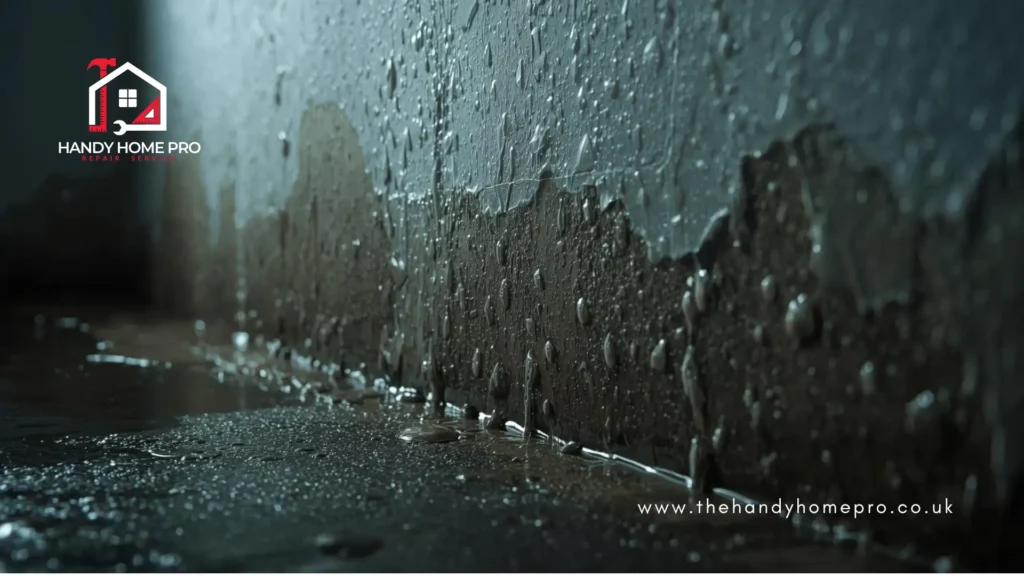
Condensation happens when warm, moisture-laden air meets a cold surface. The air can hold less moisture at lower temperatures, so the excess moisture drops out as liquid water on whatever cold surface it encounters first. In a home, that tends to be windows, external walls, corners where two surfaces meet, and areas behind furniture that sits against an outside wall.
Where Moisture in the Air Actually Comes From
The amount of moisture produced by ordinary household activity is genuinely significant. Cooking, washing, showering, drying clothes indoors, and even breathing all add water vapour to the air inside the home. A single shower can add as much as one litre of water to the air. Drying a load of washing indoors can add two litres or more. In a poorly ventilated home, that moisture has nowhere to go, and it settles on the coldest available surfaces.
Why Some Rooms Are Worse Than Others
Bathrooms and kitchens are the obvious candidates because they produce the most moisture in a short period of time. But bedrooms are also very commonly affected, particularly overnight when people are sleeping and breathing in a closed room with the window shut. Living rooms where clothes are dried on radiators or where extractor fans are absent or ineffective accumulate moisture gradually.
The Role of Cold Surfaces and Thermal Bridging
Modern double-glazed windows are less susceptible to surface condensation than older single-glazed windows because the inner pane stays warmer. But the walls themselves are often still cold, particularly in properties with solid walls rather than cavity walls, and particularly in corners where heat escapes more readily. These corners, and the wall sections directly behind large pieces of furniture that block airflow and trap cold air, are where condensation-related mould most reliably appears.
What Causes Penetrating Damp and How Do You Spot It?
Penetrating damp enters from outside and tends to appear on internal walls as localised wet patches that get worse during or after periods of heavy rain. The patch often has a relatively defined boundary rather than the spreading, corner-focused pattern of condensation.
Common sources include cracked render on an external wall, damaged or missing pointing in the mortar between bricks, failed or poorly installed window or door flashings, defective guttering that is overflowing and saturating the wall below, and roofing defects that allow water to travel down into the wall structure.
Plumbing leaks that occur within the wall cavity or ceiling structure can also produce patches that look similar to penetrating damp. A slow leak from a concealed pipe can saturate plasterboard and masonry over weeks before becoming visible on the internal surface, and by that point the damage is often more significant than it first appears. If you have a wet patch that appeared without any obvious change in the weather, and particularly if it is near a bathroom, kitchen, or above or below plumbing fittings, a plumbing inspection should be part of the diagnosis.
Further Reading: Fixing Hairline Cracks in Plaster: A Step-by-Step Guide For 2026
What Is Rising Damp and When Does It Actually Occur?
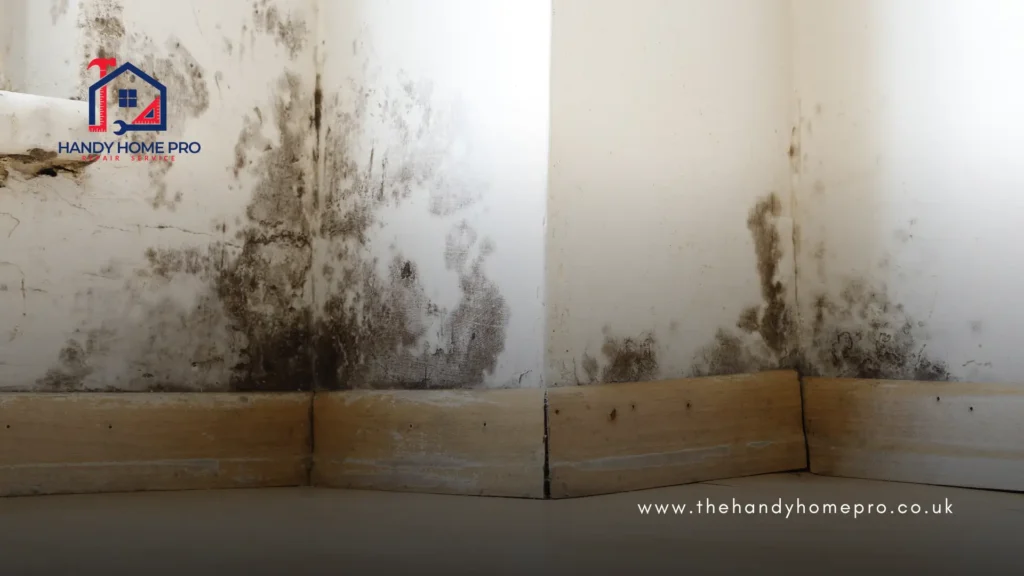
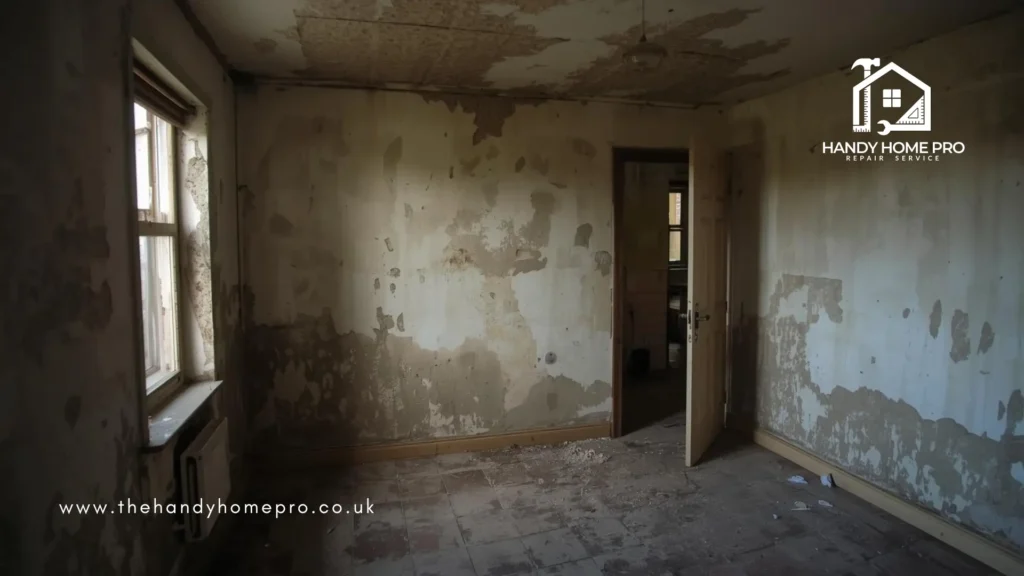
Rising damp is caused by groundwater travelling upward through the masonry of a wall by capillary action. It typically appears as a damp band across the lower section of a wall, often with a characteristic tide mark where salts from the wall material are drawn to the surface and left behind as the moisture evaporates. These tide marks, known as efflorescence, and the flaking or bubbling of paint and plaster at low level are among the more reliable signs that moisture is travelling from below rather than from outside or from condensation at the surface.
Rising damp is more common in older properties built before the modern requirement for a continuous damp-proof course became standard, or in properties where the original damp-proof course has been damaged, deteriorated, or bridged. A garden bed raised against an external wall, render that connects the ground to the wall above the damp-proof course level, or debris that has built up against the base of the wall can all create a pathway for moisture to bypass the barrier.
It is worth being cautious about any diagnosis of rising damp that is made without a proper moisture meter survey by an experienced damp specialist. The treatment for genuine rising damp, which may involve chemical injection of a new damp-proof course and re-plastering of affected sections with appropriate salt-resistant render, is both disruptive and costly. Misdiagnosis in this area is common, and some homeowners have spent significant sums on rising damp treatment for a property where the real problem was condensation and inadequate ventilation.
How to Tell Which Type of Damp You Are Actually Dealing With
A careful look at where the problem appears, what it looks like, and when it develops will usually point you toward the right cause before you spend anything on a fix.
Reading the Location of the Problem
Condensation mould almost always appears in corners, on window frames and reveals, behind furniture against external walls, and in bathrooms and kitchens. If mould is appearing in the top corners of a room or along the ceiling line of an external wall, condensation is overwhelmingly the most likely cause.
Penetrating damp appears as localised patches on external-facing walls, often in the middle of a wall rather than at corners, and typically at the location of a specific defect above it: a leaking gutter, a crack in the render, a damaged window frame.
Rising damp appears low on the wall, rarely higher than a metre from floor level, and is often accompanied by the white crystalline salting and the peeling of paint or plaster in the affected zone.
What the Stain or Mark Actually Looks Like
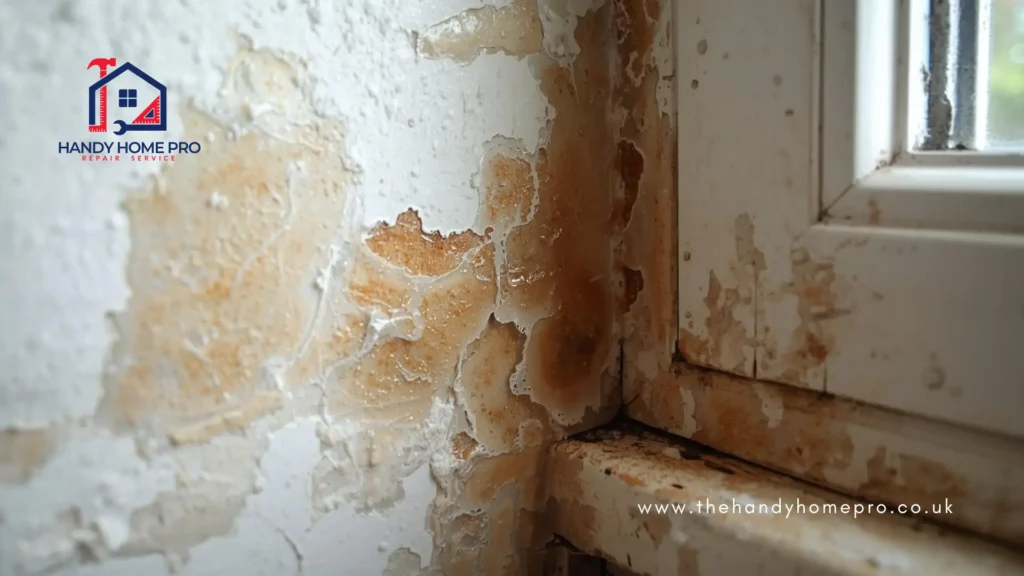
Condensation mould is typically black or dark grey and appears as a surface growth, often dotted across an area rather than presenting as a solid wet patch. It wipes away with a cloth and an appropriate cleaner, at least temporarily. Damp staining from penetrating or rising damp tends to be brown, yellow, or rust-coloured, may feel wet or cold to the touch, and often has a distinct boundary or tide mark.
Whether the Problem Appears Seasonally or Year-Round
Condensation is almost always worst in winter when the heating is on, windows are closed, and cold surfaces are colder. A mould problem that eases significantly in summer and returns every autumn is a strong indicator of a condensation cause. A damp patch that is present year-round and does not improve with better ventilation or heating is more likely to be structural.
What Mould Is and Why It Appears Where It Does
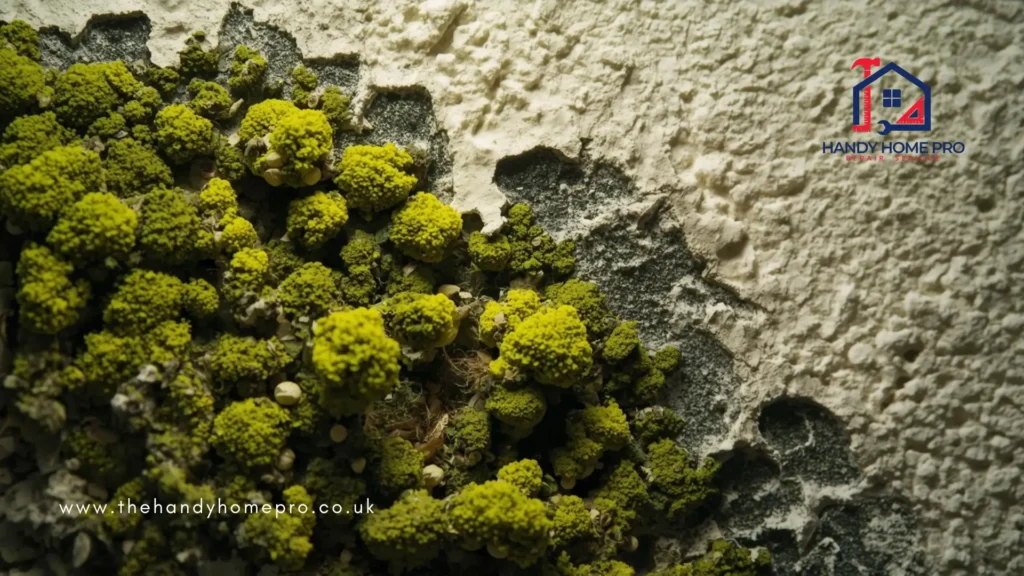
Mould is a fungal growth that establishes itself wherever moisture, warmth, and a food source are present together. In a home, the food source is the organic material in paint, plaster, paper, timber, and even dust. Mould does not need a building defect to take hold: all it needs is a surface that stays damp long enough for spores to germinate, which in practice means any surface where condensation is consistently settling and not drying out.
This is why mould appears so reliably in corners. Corners are cold because heat escapes through two surfaces simultaneously. They also have poor airflow because they are recessed from the main movement of air in the room. Moisture settles there and dries slowly, giving mould the persistent damp conditions it needs.
Cleaning mould from the surface removes the visible growth but does nothing to change the conditions. If a corner of your bathroom ceiling keeps growing mould no matter how often you clean it, the problem is not the cleaning: it is the combination of cold surface, moisture, and inadequate airflow that has not been addressed. The mould will return within weeks or months of any surface treatment as long as those conditions remain.
The Practical Steps That Genuinely Reduce Condensation and Surface Mould
Ventilation Improvements
Improving how moisture escapes the home is the most effective single step for reducing condensation. Extractor fans in bathrooms and kitchens need to be working properly, running during and for a period after moisture is produced, and venting to outside rather than into the roof space. Many older properties have fans that are either not functioning properly, are too small for the room, or are venting into a void rather than to open air. Replacing or upgrading an extractor fan and ensuring it vents correctly is a straightforward job that has a disproportionately large effect on moisture levels.
Background ventilation, such as trickle vents on window frames, serves a similar purpose. If these have been taped or blocked, restoring them helps. A small amount of continuous background airflow prevents moisture from building up to the point where it condenses on surfaces.
Opening windows briefly after cooking and showering is the simplest behavioural change, but in colder months this needs to be balanced with the awareness that a cold, poorly heated property will have more condensation on its surfaces regardless of ventilation.
Heating Habits That Help
A home that is heated consistently to a moderate temperature will have fewer cold surfaces for condensation to form on than one that is cold for most of the day and heated intensively for short periods. The pattern of allowing a property to get very cold and then heating it quickly does not give wall surfaces time to warm up, and condensation forms on the still-cold walls even as the air temperature rises. For properties that struggle with damp, keeping a low background heat level is generally more effective than intermittent bursts.
Dealing With Surface Mould That Has Already Appeared
For surface mould that is the result of condensation, a proprietary mould remover applied directly to the affected area, followed by thorough drying, is a reasonable first step. Anti-mould paint applied afterward can slow regrowth but is not a long-term solution if the underlying moisture conditions are not improved.
For larger areas of mould growth, or where mould has penetrated behind the surface of plaster or plasterboard, professional surface preparation and re-finishing is the appropriate approach. Paint applied over mould-affected surfaces without proper preparation will blister, peel, and allow the mould to re-emerge relatively quickly.
Sealing and Finishing Work That Removes the Conditions
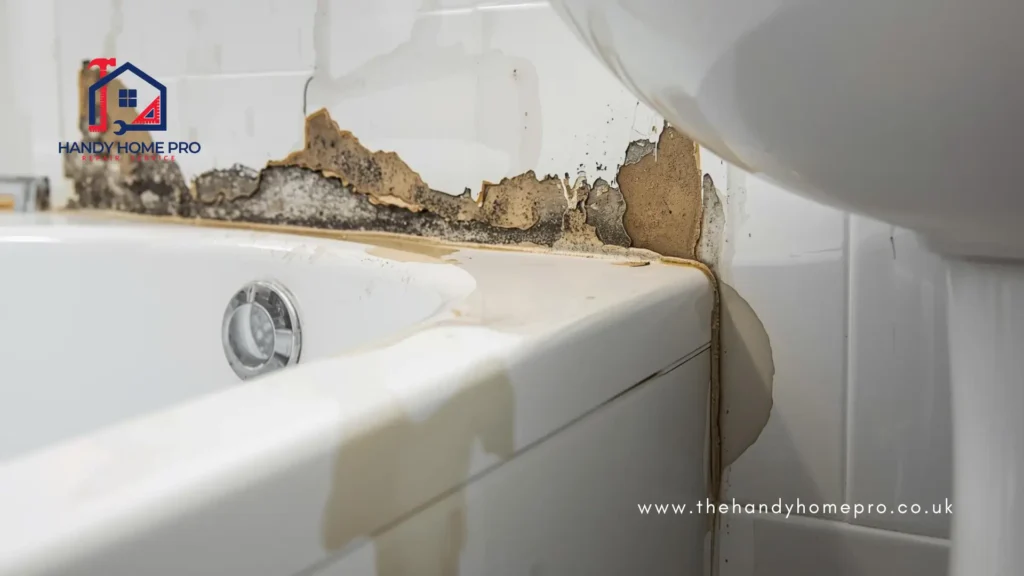
In bathrooms, failed sealant around baths, showers, and basins is a common and underappreciated source of both mould and structural moisture damage. Water that gets behind the seal and into the wall or floor structure does not stay on the surface: it migrates into the substrate over time and creates the persistent damp conditions that are very difficult to dry out by surface cleaning alone. Replacing failed sealant and ensuring bathroom surfaces are properly waterproofed is part of the practical maintenance picture for any property prone to moisture issues. Our bathroom maintenance service covers this kind of work as a routine part of keeping a bathroom in good order.
When the Problem Goes Beyond What You Can Fix Yourself
There is a category of damp and mould problem that a practical person can address sensibly themselves, or with the help of a handyman: condensation management, ventilation improvements, sealant replacement, surface mould treatment, and finishing work. These are genuine and effective interventions that make a measurable difference.
There is also a category of problem that needs specialist assessment before any work is carried out. If you have a damp patch that is growing despite improved ventilation, if the plaster on a lower section of wall is blistering or crumbling, if there is a persistent musty smell that you cannot account for, or if the damp appears regardless of the season and the weather, it is worth having a qualified damp surveyor assess the property before spending money on treatments that may not address the real cause.
Structural damp, whether from a failing damp-proof course or from a defect in the building fabric, is not something a handyman service would be the right choice to remediate. The diagnosis itself, however, and the associated practical improvements to ventilation, sealant, plumbing, and surface finishing are very much within the scope of a general maintenance visit. Grouping these practical improvements together into a single visit, rather than dealing with them piecemeal, means the conditions are addressed comprehensively rather than one at a time.
If you are not sure whether what you have is a condensation problem or a structural one, it is worth reading more about how to approach that kind of decision on our general home repair guidance. A good tradesperson will also tell you honestly if what they are looking at warrants a specialist rather than a maintenance visit. That is the right answer to give even if it means the immediate job is not theirs.
What Landlords Need to Know About Damp, Mould, and Repair Obligations
Damp and mould in rented properties carry specific responsibilities that private landlords and social housing providers need to be clear about. The general legal position in England is that a landlord is responsible for repairing defects in the structure and fabric of a property that cause or contribute to a damp or mould problem. A failed damp-proof course, defective guttering that saturates a wall, a leaking roof, or failed window seals are landlord repair obligations.
Condensation caused primarily by how a property is occupied is more nuanced in legal terms, but the practical picture has become less ambiguous in recent years. Awareness of hazard categories under the Housing Health and Safety Rating System means that severe mould growth, regardless of cause, is something landlords are expected to address rather than attribute entirely to the occupant.
Awaab’s Law, which originated from the tragedy of a child whose death was linked to extensive mould in a social rented property, has introduced specific timescales for investigating and addressing damp and mould hazards in the social housing sector. While the precise requirements differ depending on property type and tenure, the broader regulatory direction is clear: damp and mould in a rented property is a health hazard that landlords cannot responsibly ignore.
The practical step for most private landlords is straightforward: if a tenant reports damp or mould, investigate it properly rather than attributing it entirely to the occupant’s lifestyle and taking no action. A maintenance visit to assess ventilation, check sealant and plumbing, and identify whether there is a structural element to the problem is both sensible and documentable. Doing nothing, or applying a coat of anti-mould paint over an undiagnosed underlying cause, is the approach most likely to create legal and reputational risk down the line.
For landlords managing multiple properties, it is worth building damp and ventilation checks into a routine maintenance schedule rather than responding only when problems have become serious. You can find more about the maintenance services available for landlords and letting agents on our About page, or browse the FAQs if you have questions about how a maintenance visit works in practice.
Is It Time to Get This Looked At?
Damp and mould problems that are left without attention do not stabilise. They tend to get worse as moisture penetrates deeper into surfaces, as mould spreads beyond the original affected area, and as the conditions that created the problem continue unchecked. The cost of dealing with the problem at an early stage is almost always lower than the cost of remediation once the damage has had time to develop.
If you have noticed mould appearing in a room despite cleaning it, a patch on a wall that does not dry out, a bathroom or kitchen that always feels damp, or a rented property with a tenant report you need to respond to, getting a proper look at the practical maintenance picture is the sensible starting point.
We cover damp-related maintenance, bathroom sealant work, ventilation improvements, and general property upkeep across North London, Hertfordshire, and surrounding areas. If you want a straight answer on what is likely behind a moisture problem and what practical steps would genuinely help, get in touch through our contact page and we will come back to you quickly.
Recommended to Read: How to Efficiently Approach and Manage Repairs for Your Home