
Few household problems are as frustrating as a sink that won’t drain. One moment you’re doing laundry, and the next you’re staring at a pool of dirty water that’s quickly going nowhere. The good news? You almost certainly don’t need to call a plumber. Most blocked sinks can be fixed at home using simple tools and ingredients you probably already have in your kitchen cupboard.
In this guide, you’ll find the most effective DIY methods for unblocking a sink – whether it’s in your kitchen or bathroom – along with tips for preventing the problem from happening again.
Why Does A Sink Get Blocked?
Before you start fixing the problem, it helps to understand what’s causing it. Kitchen and bathroom sinks get blocked for very different reasons, and knowing which one applies to you makes it much easier to choose the right fix.
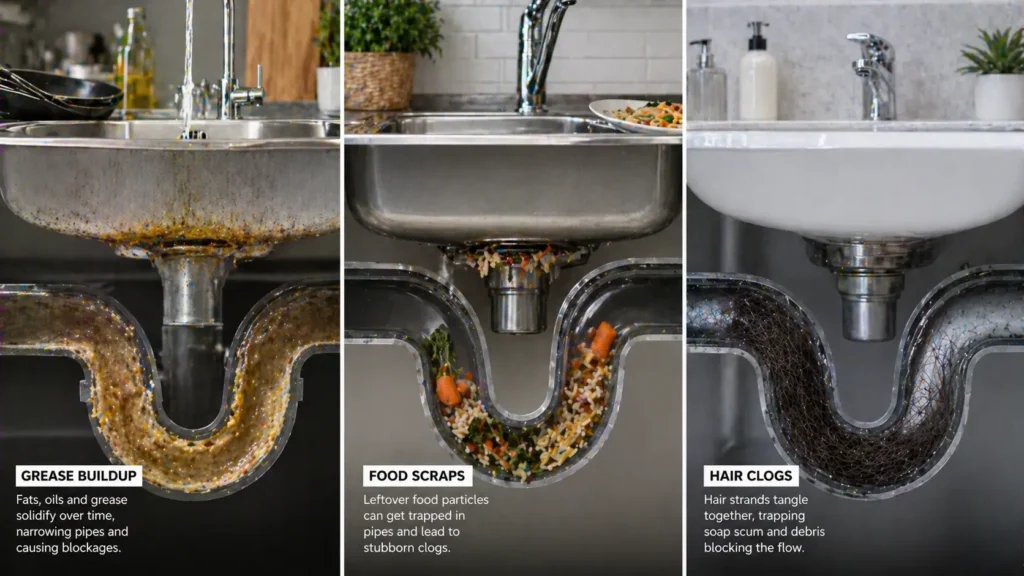
Kitchen sink blockages are usually caused by:
- Grease and cooking oil – when hot fat cools inside the pipe, it hardens and sticks to the walls, slowly trapping other debris
- Food scraps – small bits of pasta, rice, coffee grounds, and vegetable peelings gather in the U-bend over time
- Soap scum – when soap meets the minerals in hard water, it leaves a sticky residue that allows food and grease to latch onto the pipe walls
Bathroom sink blockages are most commonly caused by:
- Hair – strands collect just under the plughole and form dense, soap-coated clumps
- Toothpaste and grooming products – these dry and harden inside the pipe
- Small objects – cotton buds, razor caps, and jewellery can fall into the drain and cause instant blockages
Possible cause of understanding This means you can choose the fastest, most effective method right away, rather than working through each option.
Method 1: Pour Boiling Water Down The Drain
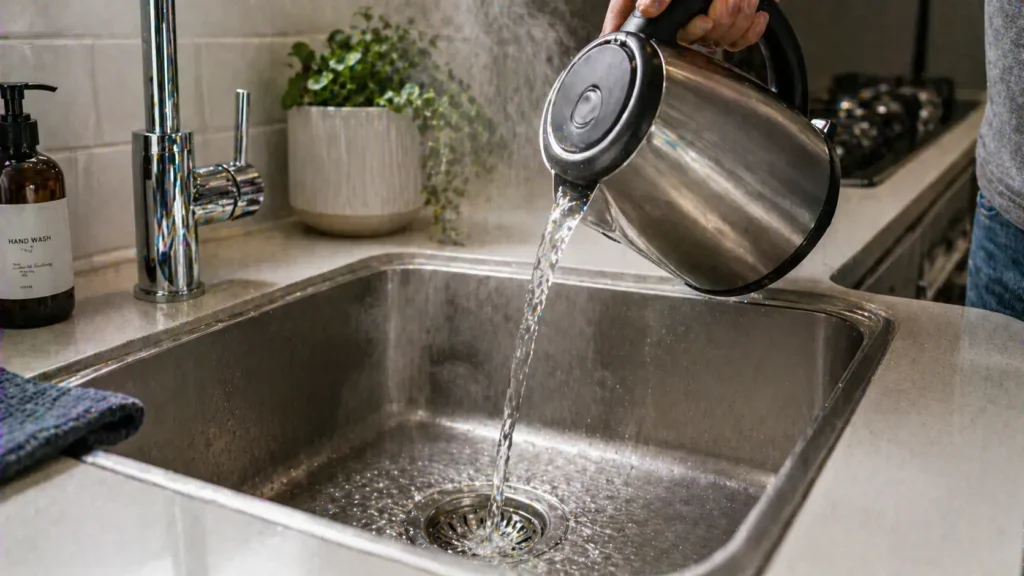
This is the easiest way to start and often works for light blockages caused by grease or soap scum. The heat softens and melts the fatty deposits stuck to the inside walls of your pipes.
How to do it:
- First, remove any standing water from the sink
- Slowly pour boiling water down the drain in two or three separate stages
- Wait a minute between each pour to allow the heat to work its way through the blockage
- Finish with a minute of hot tap water to flush everything
Important: Don’t use this method if you have PVC or plastic pipes. Boiling water can soften or warp them. Use hot – but not boiling – water instead.
This method works best as a first try, especially in kitchen sinks where grease is the most common culprit.
Recommended to Read: How To Install A Shower: Tiling & Finishing (The Ultimate Guide For 2026)
Method 2: Baking Soda And Vinegar
This is one of the most popular natural methods, and for good reason – it really works. The fizzing reaction between the two ingredients helps break down grease, hair and soap scum without any harsh chemicals.
What you need:
- 1 cup (about 150 grams) bicarbonate of soda
- 1 cup (about 250 ml) white vinegar
- Rubber stopper or wet cup
How to do it:
- Drain as much water from the sink as possible
- Pour the baking soda directly into the plughole
- Do it immediately with the white vinegar
- Cover the plughole with a rubber stopper or press a damp cloth firmly over it – this fizzing action holds the pipe in place and allows it to drain upwards.
- Let it sit for 10 to 15 minutes
- Remove the cover and flush with warm water for 30 seconds
You can also try mixing baking soda and vinegar together in a measuring cup first and then pouring the fizzing mixture directly into the drain for a faster, more concentrated reaction.
Unlike many chemical drain cleaners, this mixture will not corrode your pipes over time. It is safe to use regularly as a maintenance flush, not just when there is already a blockage.
Method 3: Baking Soda And Salt (Overnight Method)
If baking soda and vinegar alone don’t clear the clog, this overnight version gives the mixture more time to work its way through. The salt adds a mild abrasive that helps remove stubborn build-up, while the baking soda neutralizes bad odors at the same time.
How to do it:
- Mix one cup of bicarbonate of soda and one cup of table salt
- Pour the mixture directly into the plughole
- Leave it for at least two to three hours – overnight is better
- In the morning, flush with a kettle of boiling or very hot water
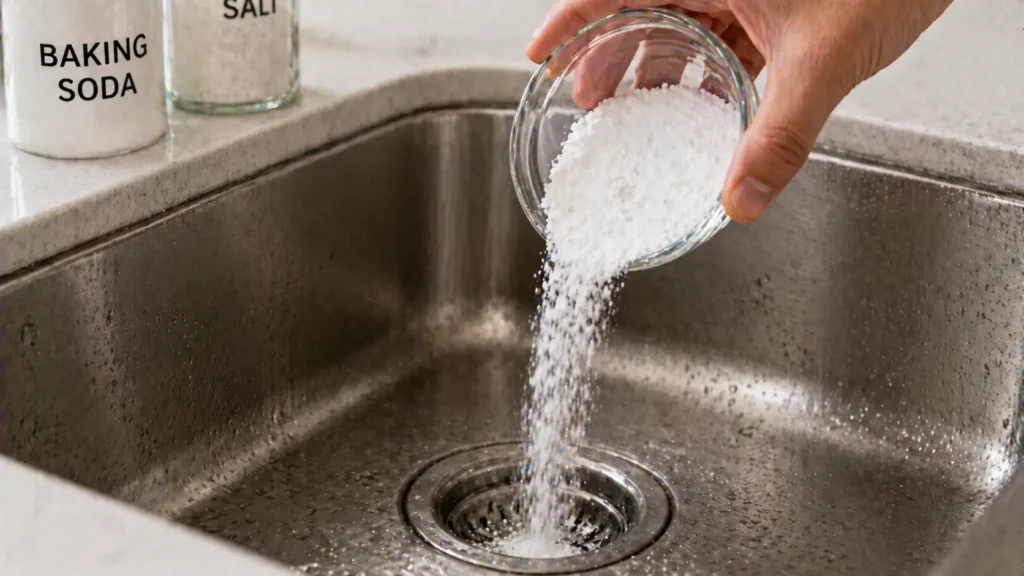
This method is especially good for bathroom sinks that drain slowly rather than completely blocked.
Method 4: Washing Powder And Boiling Water
This is a lesser-known method that works surprisingly well on kitchen sink blockages caused by cooking oil and grease. Washing powder contains enzymes and surfactants specifically designed to break down grease, making it a great ally when dealing with clogged pipes.
How to do it:
- Pour about two tablespoons of standard washing powder directly into the drain
- Then immediately fill it with a kettle full of boiling water
- The hot water activates the powder and helps cut through the grease coating inside the pipe
- Repeat if necessary, then flush with hot tap water
This is especially useful after cooking with chipped fat or heavy cooking oils. It’s a quick, cost-effective solution that most households can do without having to buy anything new.
Method 5: Use A Plunger
If liquid methods don’t work, a plunger is your next best option. It creates suction that physically dislodges the blockage and frees or pulls it out of the pipe.
What you need:
- Cup-shaped rubber plunger
- Old cloth or rag
How to do it:
- Fill the sink with a few inches of warm water – enough to cover the plunger’s rubber cup
- Block the overflow hole (usually found under the faucet) with a damp cloth. This is important – without a seal on the overflow, air escapes and the suction is too weak to do anything.
- Place the plunger squarely over the plughole, making sure it makes a complete seal.
- Grasp the handle firmly with both hands and push down, then pull up quickly – keep a fast, steady rhythm for 10 to 15 pumps.
- Lift the plunger away. If you hear a rumbling sound and see water flowing, the blockage is clear.
- Rinse the sink for one minute with hot water.
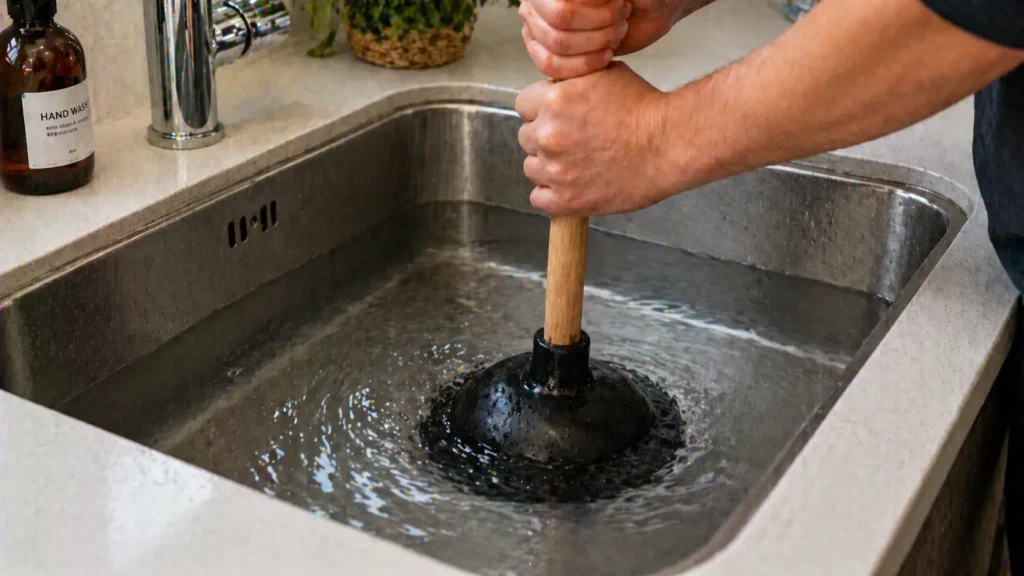
Tip: On a double-bowl kitchen sink, block the second drain with a damp cloth before you start plunging. Otherwise, the pressure will escape from the second bowl and you won’t get any suction. At The Handy Home Pro, a flat cup plunger is the recommended tool for sinks – not the flange-style plunger used for toilets, which won’t seal properly on a flat plughole.
Method 6: Wire Coat Hanger Or Drain Snake
Sometimes the blockage is physical – a clump of hair, soap scum, or debris that needs to be caught and pulled out rather than dissolved. This is where a drain snake or simple wire hanger works better than any liquid method.
Using a wire coat hanger:
- Straighten the hanger and bend one end into a small hook shape
- Gently wiggle the hooked end under the plughole
- Twist and wiggle it to catch any hair or debris
- Pull out what you find – it may not be pretty, but it works
- Flush with hot water
Using a drain snake (also called a drain auger):
- Pull the flexible end of the snake into the plughole
- Slowly push it down and turn the handle to navigate the bends in the pipe
- When you feel resistance, you’ve found an obstruction
- Twist and push to break it, or turn the hook on it and pull it back out
- Carefully pull the snake out and dispose of any debris it brings with it
- Flush thoroughly with hot water
A plastic drain snake with small barbs is ideal for bathroom sinks where hair is a major problem. The problem is. For deep kitchen clogs, a metal cable auger offers more reach. If you don’t have both tools, a wire hanger will get you surprisingly far on most bathroom sink clogs.
Method 7: Clean Out The U-Bend
If none of the above methods work, the blockage is probably right inside the U-bend-the curved section of pipe under the sink. Clearing it by hand is easier than it sounds, and it often solves problems that no liquid or tool can reach from above.
What you need:
- Rubber gloves
- A bucket or large bowl
- An adjustable spanner or your hands (many modern U-bends unscrew by hand)
- An old cloth
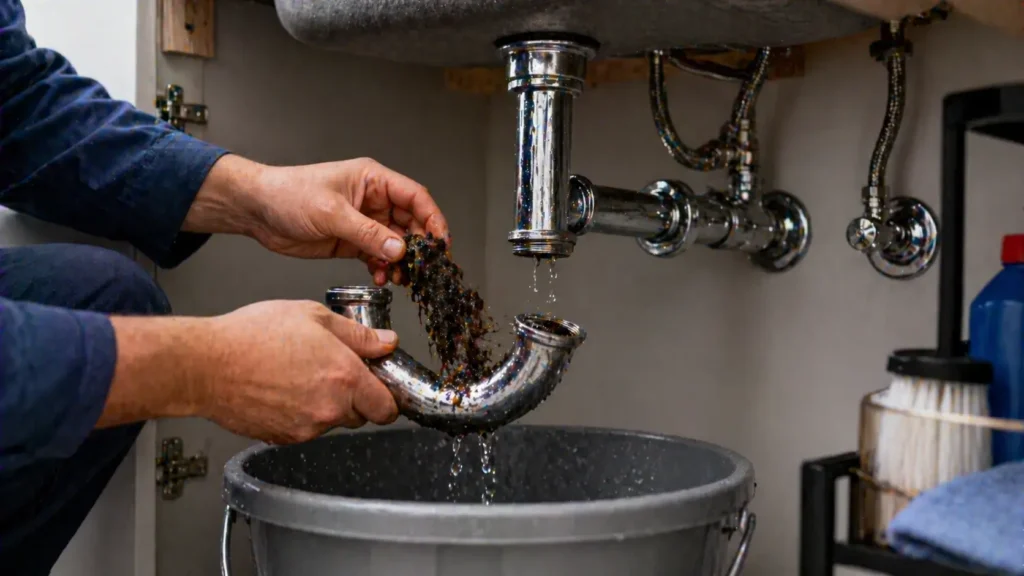
How to do it:
- Clear everything out from under the sink so you have easy access
- Place the bucket directly under the U-bend to catch the water that will spill out
- Slowly unscrew the fittings on both sides of the U-bend – turn anticlockwise
- Once the water stops dripping, remove the U-bend completely
- Look inside and use your fingers or a small brush to pull out any blockage – grease, hair, food debris, or small objects are the usual culprits
- Rinse the U-bend under a tap, clean it with a cloth, then reattach it securely
- Run cold water to check for leaks and confirm the drain is clear
This is the most thorough DIY method and almost always works, even on stubborn, longstanding blockages.
Method 8: Try A Commercial Drain Unblocker
When all else fails, a store-bought drain unblocker gives you extra chemical power. The modern enzyme-based formula breaks down grease, hair, and soap scum without the risks of old caustic products. It’s designed to be submerged in standing water and work directly on the blockage.
How to use one safely:
- Read the label first – make sure the product is suitable for your type of sink (stainless steel, ceramic, stone, or composite)
- Pour the recommended amount slowly down the drain
- Leave it for the time stated on the packaging – usually 15 to 30 minutes
- Flush with plenty of hot water
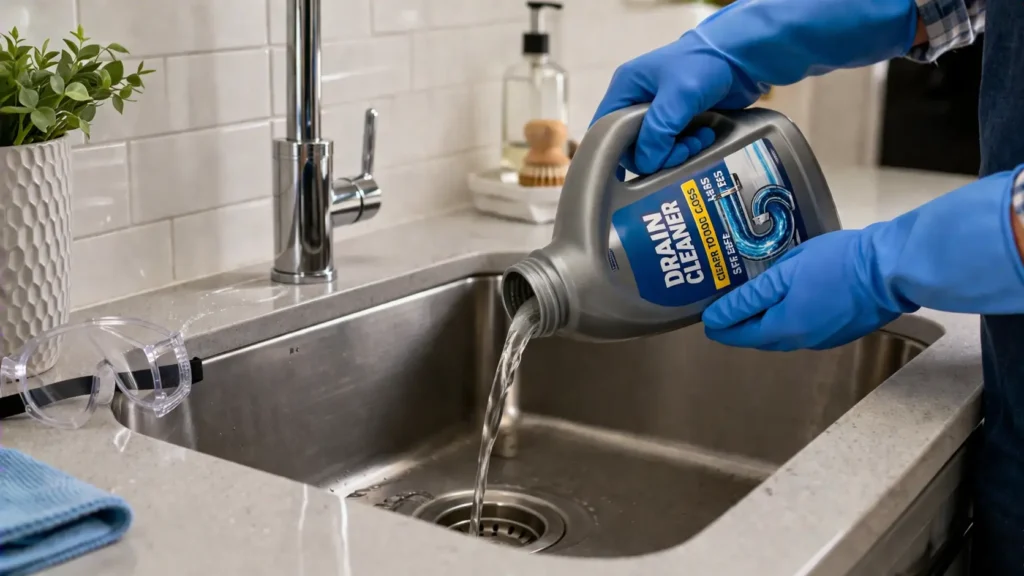
Safety rules:
- Never mix a commercial drain cleaner with baking soda and vinegar, or with bleach – this can create dangerous chemical reactions
- Always wear rubber gloves
- Keep the room ventilated while the product works
- Store it somewhere children cannot reach it
Handy Home Pro recommends choosing enzyme-based products over caustic soda formulas whenever possible, especially for regular maintenance use.
How To Prevent A Blocked Sink In The Future
Once you have cleared the blockage, a few simple habits will help you keep your sink flowing freely for the long term.
- Install a drain strainer or plughole guard to catch hair, food scraps, and small objects before they go down the drain – this single step prevents the majority of blockages
- Never pour cooking oil or fat down the sink – allow it to cool and scrape it into a sealed container for the bin instead
- Flush your sink with hot water once a week – just a full kettle poured slowly down the plughole keeps minor grease build-up from hardening
- Use the baking soda and vinegar method monthly as a maintenance rinse, even when the sink is draining normally
- Clean the U-bend every few months if your sink is in heavy use – it takes five minutes and prevents slow drainage from gradually becoming a full blockage
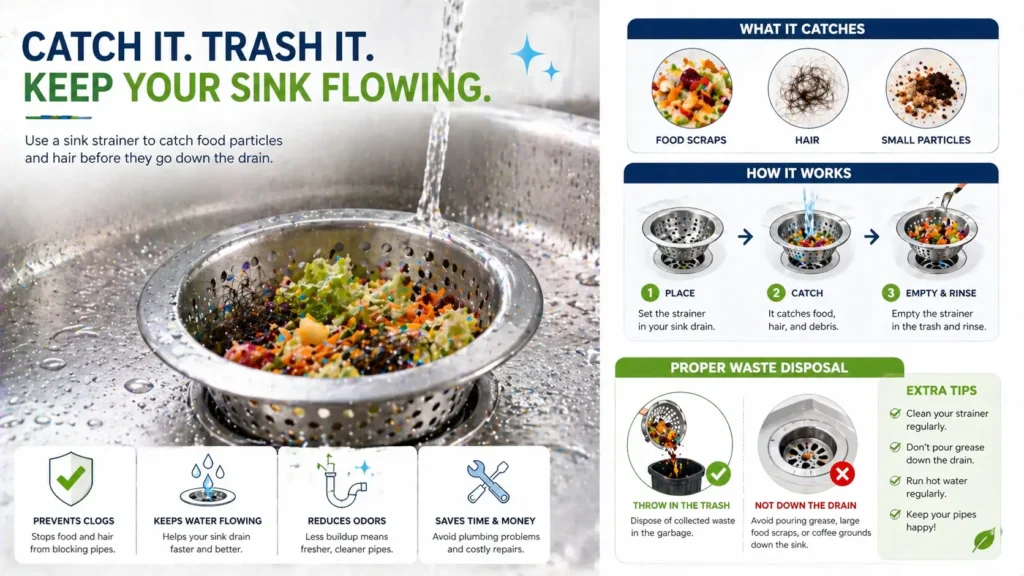
A small amount of regular attention saves a much bigger headache later.
Read Next: Fixing Hairline Cracks in Plaster: A Step-by-Step Guide For 2026
When To Call A Plumber?
Most household sink blockages respond to one of the methods above. But there are times when calling a professional is the right decision:
- The sink remains completely blocked after trying multiple methods
- Multiple sinks or drains in the house are blocked at the same time (this can suggest a deeper problem in the main drainage system)
- You notice a foul smell that does not go away even after clearing the visible blockage
- Water is backing up into other fixtures when you use the sink
- You can hear gurgling noises from other drains when water flows away
If any of these apply, the problem is likely further down in the shared drain system, and a qualified plumber or drain engineer is the right next step.
Conclusion:
A blocked sink is one of those problems that looks worse than it is. With the right method and a little patience, most blockages can be cleared quickly without any professional help or expensive products. Start with the simplest option – boiling water or baking soda and vinegar – and use a plunger or drain snake if necessary. When in doubt, a U-bend is almost always where the real problem lies. At The Handy Home Pro, the message is simple: prevention is better than cure. A drain strainer, a weekly hot water flush, and a monthly baking soda rinse are small habits that will keep your pipes clear and your sink draining properly.
Frequently Asked Questions:
Start with a kettle of boiling water, slowly pouring it down the drain. If that doesn’t work, try baking soda and then white vinegar, and let it sit for 10 minutes before flushing. For physical blockages, use a plunger or wire coat hanger to dislodge the debris.
The baking soda and vinegar method works well without any special tools. Alternatively, straighten a wire coat hanger into a hook and use it to pull hair and debris out from inside the plughole. Hot water and washing powder can also remove sticky kitchen clogs.
A mixture of baking soda and white vinegar followed by hot water helps break down hair and soap scum in a bathroom drain. For very stubborn hair clogs, a plastic drain snake with barbs is the most reliable tool – it physically grabs the hair and pulls it out.
No. Boiling water is safe for metal and ceramic sinks, but it can soften or crack PVC and plastic pipes. If you have plastic pipework, use very hot tap water instead of boiling it completely in a kettle.
Fit a drain guard or strainer over the plughole. Never pour cooking oil or fat down a kitchen sink. Flush weekly with hot water and do a baking soda and vinegar rinse once a month to keep your pipes clear between deep cleanings.
Mixing a small amount of washing-up liquid with boiling water can help loosen stubborn clogs in a kitchen sink. First, pour a generous squirt down the drain, followed by a full kettle of boiling water. It works best on light clogs where grease or oil is the main culprit.
If multiple drains in your home are blocked at once, the blockage quickly returns after cleaning, or if you see water backing up into other fixtures, call a plumber. These signs often point to a deeper problem in the main drainage system that DIY methods can’t reach.