
There’s nothing worse than flushing the toilet and seeing water coming up instead of down the drain. Water drips down your throat. Panic sets in. But here’s the truth – a blocked toilet is one of the most common household problems, and in most cases, you can fix it yourself without spending a dime on a plumber.
This guide explains everything you need to know about how to unblock a toilet quickly, safely, and effectively. Whether you have tools on hand or just household items in your kitchen cupboard, here’s a method that will work for you.
Why Do Toilets Get Blocked in the First Place?
Before you can fix the problem, it helps to understand why they happen. Most toilet blockages are caused by a few simple reasons.
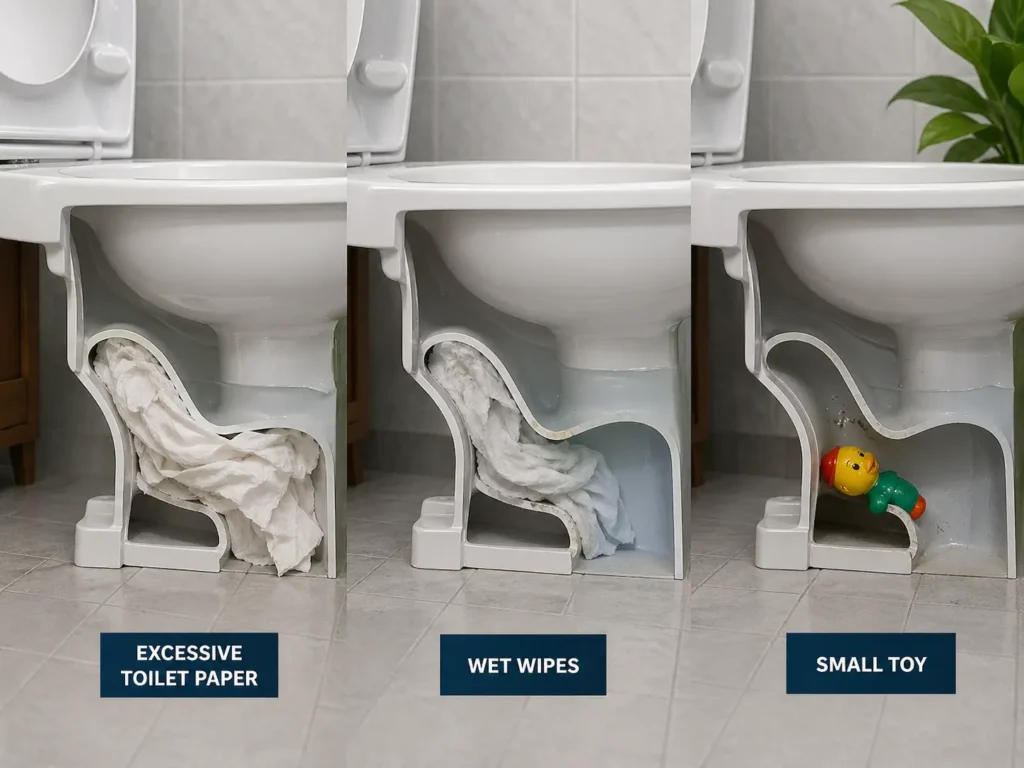
The most common cause is flushing too much toilet paper at once. Even though toilet paper breaks down in the water, a large portion of it can end up in the waste pipe and cause a partial or complete blockage.
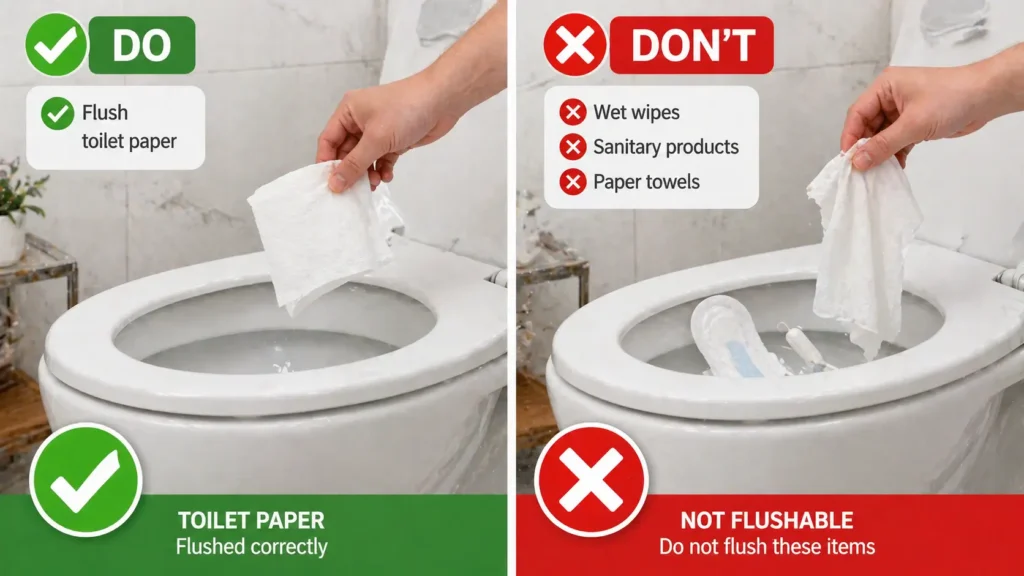
Another major cause is flushing things that don’t belong in the toilet. Wet wipes, cotton buds, sanitary products, and paper towels are the biggest culprits. These items don’t break down in the water like toilet paper, and they quickly stick to the sides of the pipes and create stubborn clogs.
Sometimes, solid objects-like a child’s toy or a bar of soap-accidentally fall into the bowl and cause an immediate blockage. Toilets located near shelves or used by young children are especially susceptible to this.
It’s also worth knowing that older toilets with narrow pipes or low flush rates are more likely to become blocked than newer models. If your toilet is frequently blocked, the design of the toilet itself may be part of the problem.
Continue Reading: How To Remove Wallpaper: Tips & Process (A Complete Guide 2026)
How to Tell If Your Toilet Is Truly Blocked
Not every slow flush means a full blockage. Here are the key signs to look out for:
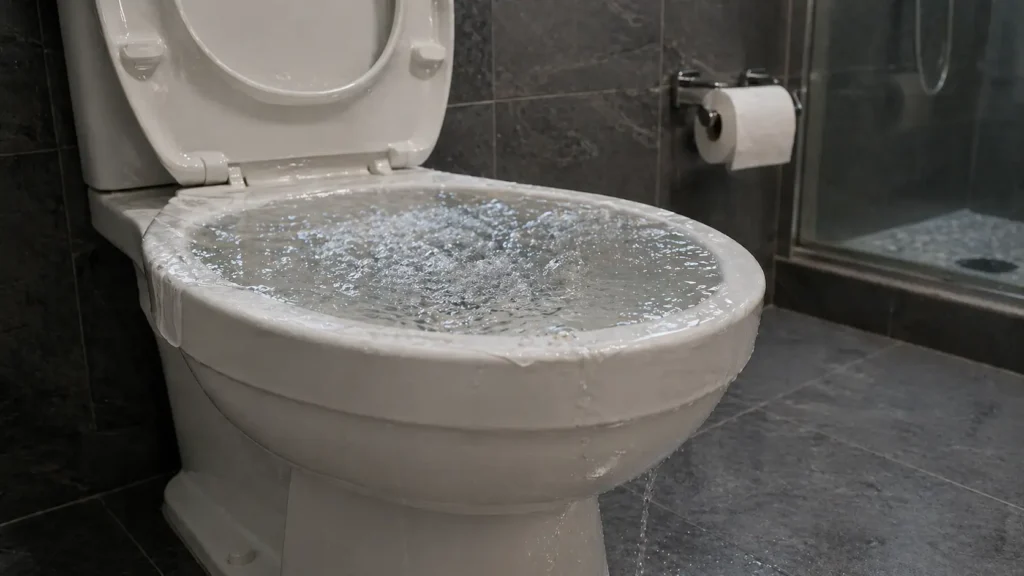
- The water rises much higher than normal after you flush
- The toilet completely fails to drain at all
- The flush feels weak and water drains away slowly
- You hear gurgling or bubbling sounds coming from the bowl
- Other fixtures like your sink or bath start draining slowly too – this can mean the blockage is deeper in your main drain
If multiple fixtures are affected at once, the problem may be further down in the drain system. For a blocked toilet, you can almost always handle it yourself.
Step 1 – Stop the Water Before You Do Anything Else
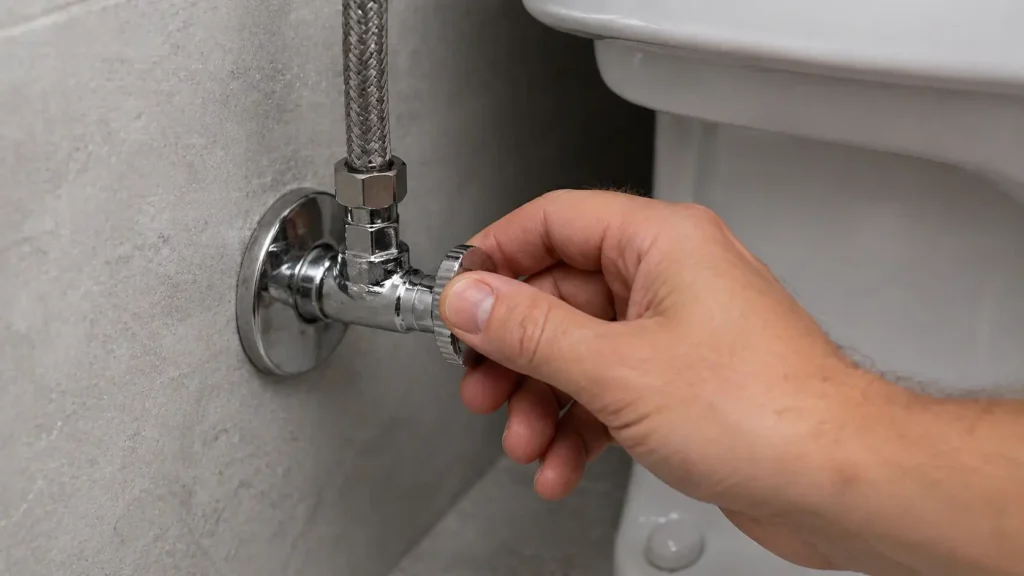
The first thing you need to do when you see water rising in the bowl is to stop yourself from flushing again. Flushing a second time will push more water into the already full bowl and cause the water to overflow.
Next, find the isolation valve – it’s a small tap or lever on the pipe that runs along the wall behind your toilet. Turn it clockwise to shut off the water supply. This gives you complete control over the situation and eliminates any risk of water flooding your bathroom floor.
Once the water supply is turned off, place old towels or sheets of newspaper around the base of the toilet. This will catch any splashes or drips while you work, and it will make the final cleanup much easier.
What You Need Before You Start
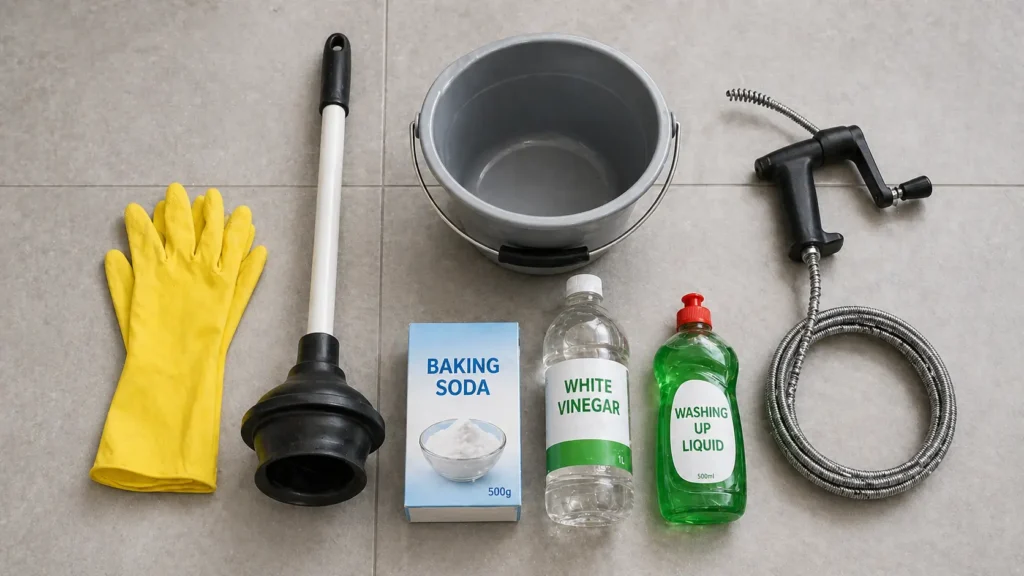
Having the right tools ready will make the whole process faster and cleaner. Here’s what to gather before you get started:
- Rubber gloves – ideally a sturdy pair that extends up to the elbow
- A flange plunger – this is a toilet-specific plunger with a fold-out rubber piece at the bottom that creates a strong seal in the bowl. A standard flat sink plunger does not work well on toilets
- A bucket – useful for adding extra water to the bowl if needed
- Old towels or newspaper – to protect the floor
- Washing-up liquid – a good backup option
- Baking soda and white vinegar – for an eco-friendly approach
- A toilet auger (also called a plumbing snake) – only needed for deep or stubborn blockages
Method 1: The Plunger (The Fastest and Most Reliable Fix)
A good plunger is the single best tool for unblocking a toilet, and it handles most clogs quickly.
Before you start the plunger, try soaking the rubber end of the plunger in warm water for five minutes. This softens the rubber and helps it form a tight seal inside the bowl.
Place the plunger directly over the drain at the bottom of the bowl and make sure it is completely covered with water. If there is not enough water, add some water from the sink using your bucket.
Push the plunger down with slow, firm pressure at first to expel any trapped air. Then start plunging with firm pressure and a pulling motion, increasing your speed as you go. Continue this for at least five minutes. Most blockages will respond within this time.
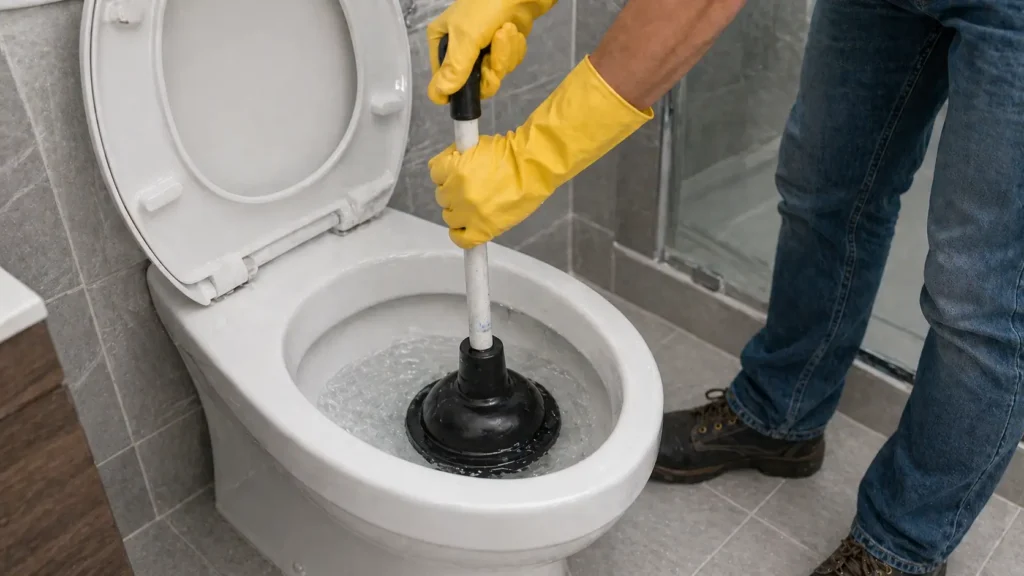
When you feel a change in suction or hear the water begin to move, check the bowl. If water comes out, flush it gently once to make sure the blockage is clear.
If it only partially drains, let the bowl refill to its normal level and start flushing again. Stubborn clogs sometimes require two or three flushes before they are completely cleared.
Method 2: Hot Water and Washing-Up Liquid (No Plunger Needed)
If you don’t have a plunger handy, this method works very well on small organic blockages caused by debris and toilet paper.
Start by pouring a generous amount of dishwashing liquid into the bowl. Spray it over the entire surface of the bowl, not just one spot. Let it sit for about 30 minutes so it can penetrate the dirt.
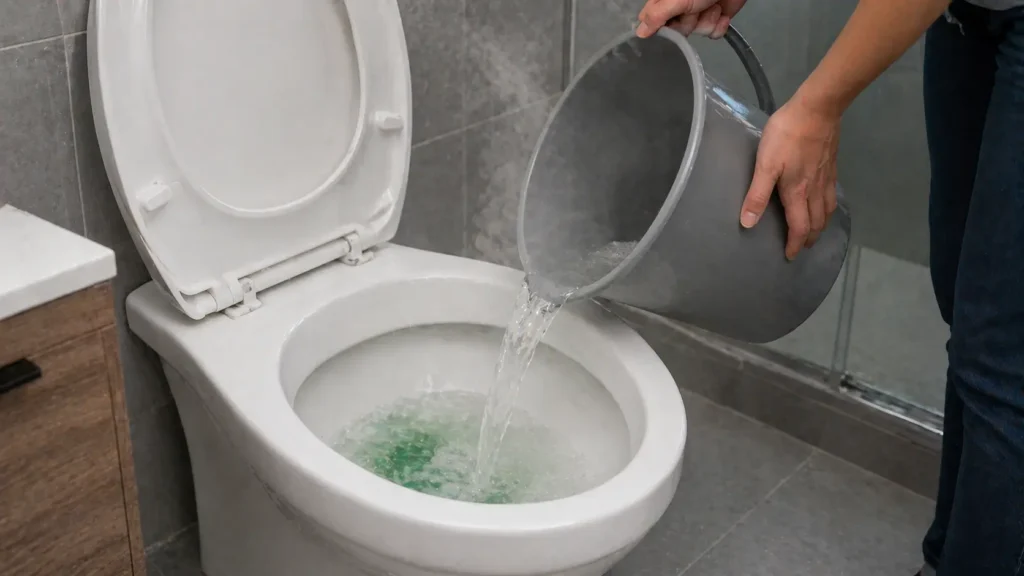
While you’re waiting, heat a large pot or bucket of water on the stove or kettle. The water should be very hot, but not boiling. Never pour boiling water into a ceramic toilet bowl-the sudden heat can crack the porcelain, and you’ll be left with a much more expensive problem.
Pour warm water into the bowl at waist height. The height adds a little force to the pour, which helps to dislodge the softened dirt from the pipe. Let the mixture sit for another 10 to 15 minutes, then flush.
For extra pressure, immediately proceed by pouring one cup of baking soda and two cups of white vinegar into the bowl. This fizzing mixture breaks down any remaining material stuck to the walls of the pipe. Let it bubble for 30 minutes before flushing again.
Method 3: Baking Soda and Vinegar (The Eco-Friendly Option)
If you prefer to avoid chemical cleaners or you want a greener approach, baking soda and white vinegar work well on soft, organic blockages.
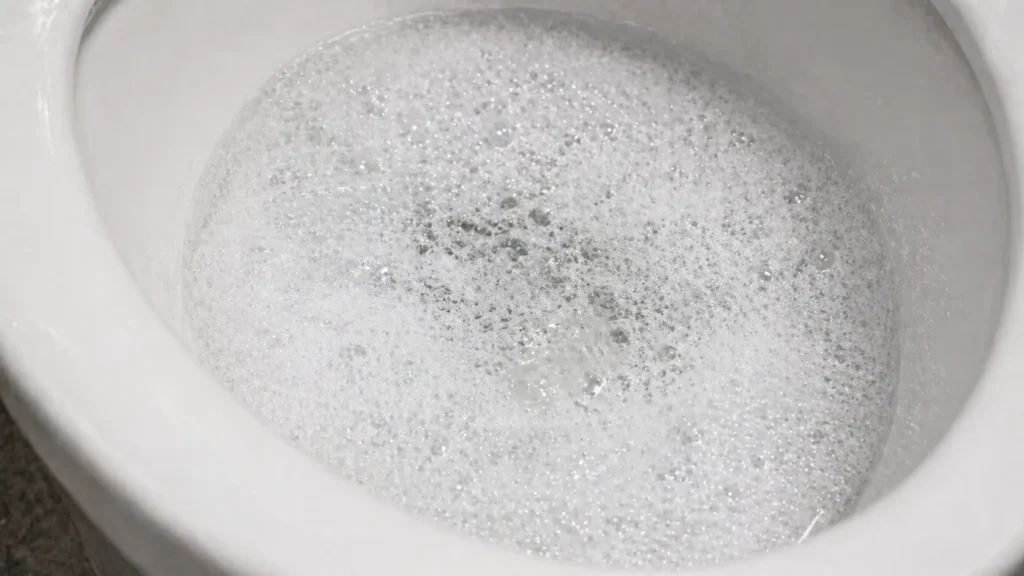
Pour a full cup of baking soda directly into the toilet bowl and let it sit for a few minutes. Then slowly add two cups of white vinegar. The mixture will begin to foam and bubble – this is completely normal and exactly what you want.
Let the solution sit for at least 30 minutes. For more stubborn clogs, leave it overnight if possible. The next morning, pour a bucket of hot (not boiling) water into the bowl from waist height and then flush. This method clears most clogs when given enough time.
Method 4: Using a Toilet Auger for Deep Blockages
When plunging and home remedies don’t work, the problem is usually a blockage deep inside the S-bend or waste pipe. This is where a toilet auger (also called a plumbing snake or drain snake) comes in handy.
A toilet auger is a flexible coiled cable with a handle. It goes deeper into the pipe than a plunger can and either breaks up the blockage or hooks onto it so you can pull it out.
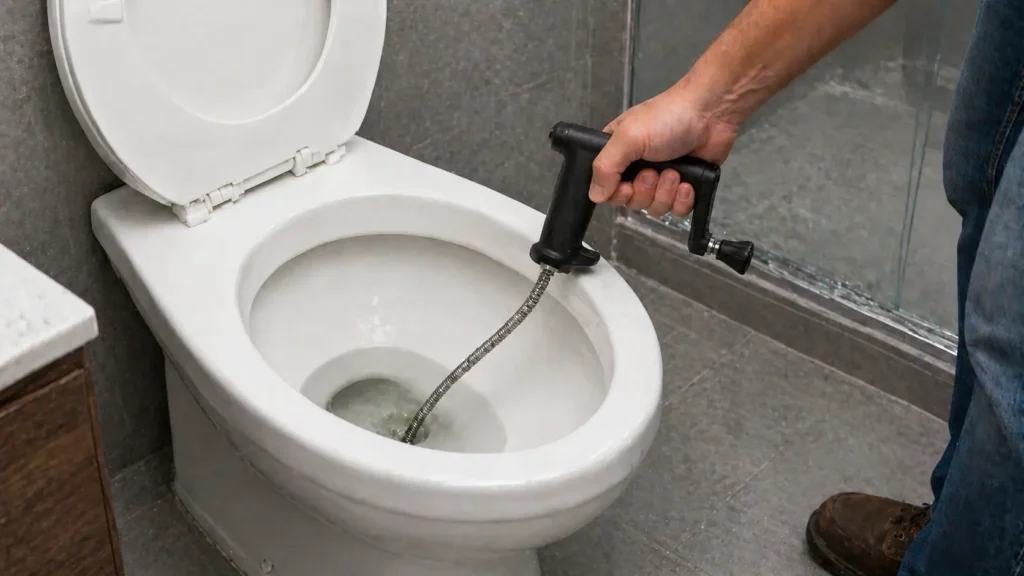
Slowly insert the flexible end of the auger into the toilet drain. Push gently until you feel resistance – that’s the blockage. Once you reach it, turn the handle steadily. Don’t force it, as rough handling can scratch the inside of the porcelain bowl.
The auger either breaks the blockage into small pieces that can be flushed, or wraps around a solid object so you can pull it back out. Once you’ve cleared the blockage, flush the toilet to make sure the pipe is clear.
Read Also: How to Fix a Leaking Tap Fast: The Ultimate Guide to Tap Washer Replacement & Simple DIY Repair
Method 5: The Household Bleach Trick (For Heavy Blockages)
If the main problem is a buildup of debris and other methods haven’t worked, household bleach can help break down the material quickly.
Pour two to three cups of bleach into the toilet bowl. After a minute, add one cup of washing powder. Let the mixture sit for 10 to 15 minutes, then flush. This mixture works well on thick debris blockages that resist other methods.
Important: Never mix bleach with vinegar or any other cleaning chemical. The fumes it produces are toxic and can be really dangerous in a closed bathroom space.
Things You Should Never Do When You Unblock a Toilet
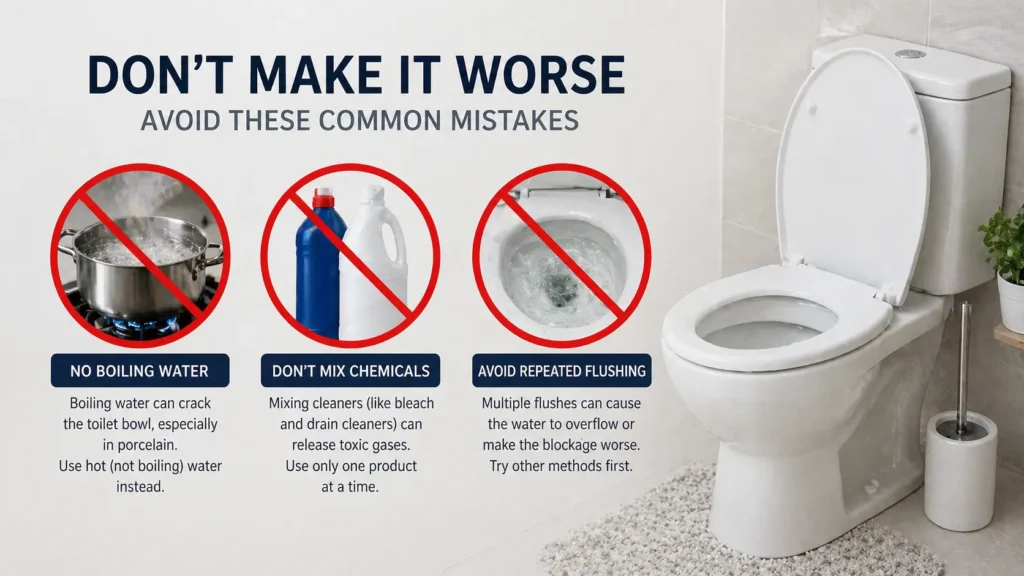
A few common mistakes turn a simple fix into a serious problem:
- Don’t flush repeatedly when the bowl is full – overflow makes everything worse
- Don’t use boiling water – it cracks porcelain
- Don’t mix chemical cleaners – this produces toxic fumes
- Don’t use a flat sink plunger – it doesn’t seal properly inside a toilet bowl
- Don’t force the auger – gentle turns only, or you risk scratching the toilet
How to Prevent Toilet Blockages in the Future
The best way to deal with a blocked toilet is to prevent it from happening again. A few small habits make a big difference:
Only flush toilet paper – nothing else. Wet wipes, cotton pads, sanitary products, and tissues should always go in the bin, even if the packaging says “flushable.” These items are one of the biggest causes of both blockages and widespread drainage problems in the home.
Use a moderate amount of toilet paper per flush. If you need more, flush in two separate stages instead of flushing all at once.
Once a month, pour a cup of baking soda and a kettle of hot (not boiling) water down the toilet as a regular maintenance flush. This keeps the walls of the pipe clean and reduces build-up before it forms a blockage.
At The Handy Home Pro, we always recommend keeping a good flange plunger under the sink-it’s a small investment that can save you headaches when you need it most.
When Should You Call a Professional Plumber?
DIY methods can handle most toilet blockages. But there are situations where a plumber is the right decision:
- The blockage keeps coming back within a day or two of cleaning
- You hear noises from multiple drains at once
- Your sink, shower or bathtub also has slow draining problems
- You’ve tried every method and the toilet still won’t drain at all
These signs point to a blockage deep inside the main drain line, far enough away for household appliances to reach. For a simple unblocking of a toilet, a plumber will usually charge around £45. More complex jobs involving a call-out fee can be closer to £100 to £120. Getting a quote in advance always helps to avoid surprises
Conclusion
A blocked toilet may seem like an emergency, but in most cases it’s a manageable DIY task. Start by turning off the water supply, protecting your floor, and working through the methods in order – first a plunger, then hot water and washing-up liquid, then baking soda and vinegar, and finally a toilet auger for deeper blockages.
The key things to remember are to never flush the bowl too often when it’s full, never use boiling water, and never mix chemical cleaners together.
With the right approach, you can unblock a toilet in less than 30 minutes without spending a dime on a plumber. And by making a few simple changes to the flush mechanism, you can easily keep your toilet running for years to come.
FAQs:
The fastest way is to use a flange plunger with a strong, repeated push-and-pull action for at least five minutes. Most blockages are cleared in one session this way.
Yes. Pour half a cup of washing-up liquid into the bowl, then pour a bucket of hot (not boiling) water at waist height. Let it sit for 15 to 20 minutes, then flush. For soft clogs, baking soda and white vinegar also work well.
Yes, but use it yourself. Pour two to three cups of bleach into the bowl, add one cup of washing powder after a minute, wait 10 to 15 minutes, then flush. Never mix bleach with vinegar or any other cleaner – this creates toxic fumes.
Frequent drain clogs usually mean one of three things – flushing too much toilet paper at once, items that can’t be flushed down the drain, or a deep buildup along the waste pipe. If the drain keeps clogging, a plumber can check the pipe for damage or repeated blockages.
Call a professional if the drain keeps coming back up after cleaning, if other drains in the house are also affected, or if you hear rumbling coming from multiple fixtures at once. These signs indicate a blockage in the main drain line that requires specialist equipment to clear.
Only flush toilet paper. Keep wet wipes, cotton pads, and sanitary products in the bin. Use a moderate amount of toilet paper per flush. Once a month, pour baking soda and hot water into the toilet as a simple maintenance measure. Having a good plunger under the sink means you’re always prepared if a blockage occurs.
No – and you should never try it. Pouring boiling water into a ceramic toilet bowl can crack the porcelain due to the sudden change in temperature. Always use water that is just below the boiling point, such as water that has been drawn from a kettle after it has cooled for a minute or two.